One monthAn illustration, not a real case
Understanding Coercive Control
Ten sourced episodes, every source behind them, and where each state's law stands.
Any single act can look small. The pattern is the point. S-001
Start with Episode 1 What is coercive control?Start where your work is
A report sees one date. The person lives the whole month:
movements monitored
communications monitored
finances controlled
movements monitored
daily behavior controlled
isolation
communications monitored
basic necessities withheld
movements monitored
technology used to stalk or harass
finances controlled
humiliation
isolation
communications monitored
dependence
movements monitored
identity documents controlled
finances controlled
What happened on this date?
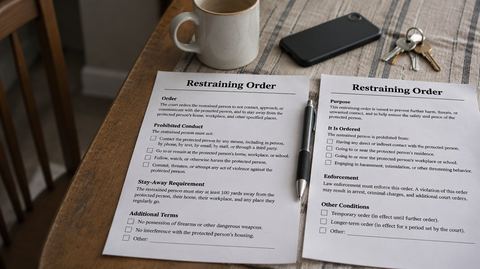
What a protective order petition asks. Episode 1.
communications monitored
punishment
movements monitored
access to services controlled
isolation
communications monitored
abusive litigation
finances controlled
movements monitored
financial exploitation
communications monitored
Who this is for
For anyone who only gets to see one date: in the classroom, in the exam room, on the 911 line, at the front door, at the shelter, in the courtroom.And for the people who write the laws, design the tools that spot danger, and train the people who use them.
What is coercive control?
Established finding
Coercive control is a pattern of behavior that takes away another person's freedom: the rules, the monitoring, the punishments, the shrinking world. Sociologist Evan Stark's 2007 book framed domestic abuse this way, as an ongoing pattern that strips a person's liberty rather than a series of separate violent incidents. Any single act can look small. The pattern is the point.
Source: S-001, a 2025 law journal article that summarizes Stark.
Contested
Researchers have not settled on a single definition. One proposal says three things must be present: behavior aimed at controlling the other person, that person's experience of it as controlling, and a credible threat behind it.
Source: S-003, read through a bench-book summary of the 2017 article.
Lawchecked Nov 10 to 22, 2026
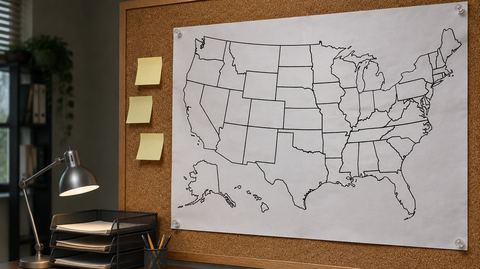
The law is uneven. Eleven states name and define coercive control in a statute, and they do not agree on what it means or where it applies.
Source: State Law Atlas. Group 1, 11 rows, each checked between Nov 10 and Nov 22, 2026.
Ten episodes, one picture. Start where your work is.
The episodes build on each other. Each adds a layer: what coercive control is, how it works, how dangerous it can be, what it does to children, how it gets counted, who it happens to, what the law says, and where the arguments are. We think everyone gets the most from all ten, in order. If you need something specific, or need it quickly, these are the episodes closest to your work.
- Advocates and hotline staffShelter and hotline staff, legal and court advocates, coalition trainers. All ten episodes, in order, each closing with what it means on Monday morning.Closest to your work All ten episodes, in order.For advocates and hotline staff
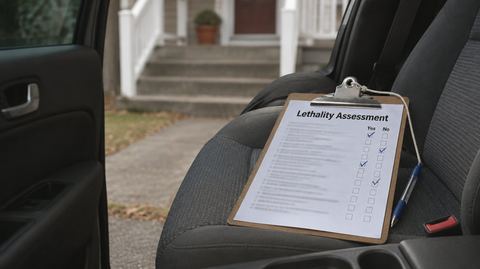
- Police and 911Officers, deputies, 911 call-takers and dispatchers, and their trainers. Risk that leaves no mark, the lethality questions two states now require, and telling who is in danger.Closest to your work Episodes 2, 3, 6 and 8.For police and 911
- LawyersProsecutors, defense attorneys, and family, protective order and legal aid lawyers. The statutes state by state, the appellate decisions, and the questions still open.Closest to your work Episodes 7, 8, 9 and 10.For lawyers
- Judges and court staffJudicial officers, custody evaluators, guardians ad litem and clerks. What appellate courts have said, the custody research, and the training laws.Closest to your work Episodes 1, 4, 9 and 10.For judges and court staff
- Health care, schools and social servicesDoctors, nurses, teachers, school counselors, social workers and child protection staff. What control does to children, what screening questions find, and the signs that leave no mark.Closest to your work Episodes 2, 3, 4 and 5.For health care, schools and social services
- Lawmakers and policy staffLocal, state and federal lawmakers, their staff, and the people who design intake tools and training. What eleven states wrote, what the numbers show where it is a crime, and the arguments on each side.Closest to your work Episodes 7, 8, 9 and 10.For lawmakers and policy staff
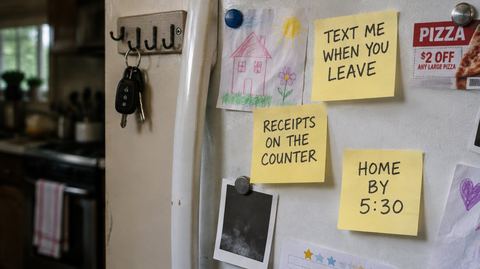
The record shows what can happen when the pattern is missed: a traffic stop classed as a mental health crisis S-029, a trial court that treated financial control and isolation as 'just evidence of marital problems' S-014, and a study in which, given a case of serious coercive-controlling violence, 23% of custody evaluators said they would explore the controlling behavior S-195.
Season 1: Coercive Control Series
Evidence-based education on coercive control
Ten episodes that build on each other. Each one sets out what the research shows, what the law says in the states it covers, and what court opinions and other public records show. Each closes with what it means on Monday morning.
New episodes on Tuesdays, Dec 1, 2026 to Jan 26, 2027. The dates are a plan and may change. Sources and chapters are already on each episode's page.
December 2026
January 2027
-
1Dec 2026TuesdayNext
-
8Dec 2026Tuesday
-
15Dec 2026Tuesday
-
22Dec 2026Tuesday
-
29Dec 2026Tuesday
-
5Jan 2027Tuesday
-
12Jan 2027Tuesday
-
19Jan 2027Tuesday
-
26Jan 2027Tuesday





How this series checks its facts
- Every claim has a numbered source. Each one is marked as an established finding, a contested claim, or opinion.
- Every statement of law carries the date it was checked. Laws change and differ by state. The State Law Atlas shows the date on every row.
- Real cases come from the public record. Published court opinions and official reports. We add nothing that identifies anyone beyond what the source already publishes.
- Debates are set out fairly. Criminalization, measurement, gender and custody each get both sides' strongest argument.
Established finding
Contested
Opinion
Sources library
The series library holds 159 sources, plus the State Law Atlas. Search them, or filter by episode, kind and place. Each one lists its citation, its link and the episodes that use it.
State Law Atlas
Where does your state stand on coercive control?
All 50 states and D.C., sorted into four groups. Every row has a citation, a source link, the date it was checked and how sure we are.
- 11 name and define it
- 4 come close
- 11 use older words (our reading)
- 25 nothing in statute yet that we found
All 51 rows were checked between Oct 25 and Nov 22, 2026.
Open the atlas